Why Standing Liberty Quarters Are Harder to Date Than They Look
Standing Liberty Quarters have gotten complicated with all the misinformation flying around about which dates are actually scarce. As someone who spent three years digging through estate-sale boxes and junk bins, I learned everything there is to know about reading these coins. Today, I will share it all with you.
My real problem wasn’t finding rare dates — it was actually reading them. The 1916 gets all the attention. Everyone knows the 1918/17-S overdate exists. But walk into a local coin club and ask someone to confidently date a circulated 1919 or 1923 pulled straight from a roll. You’ll see the real challenge fast.
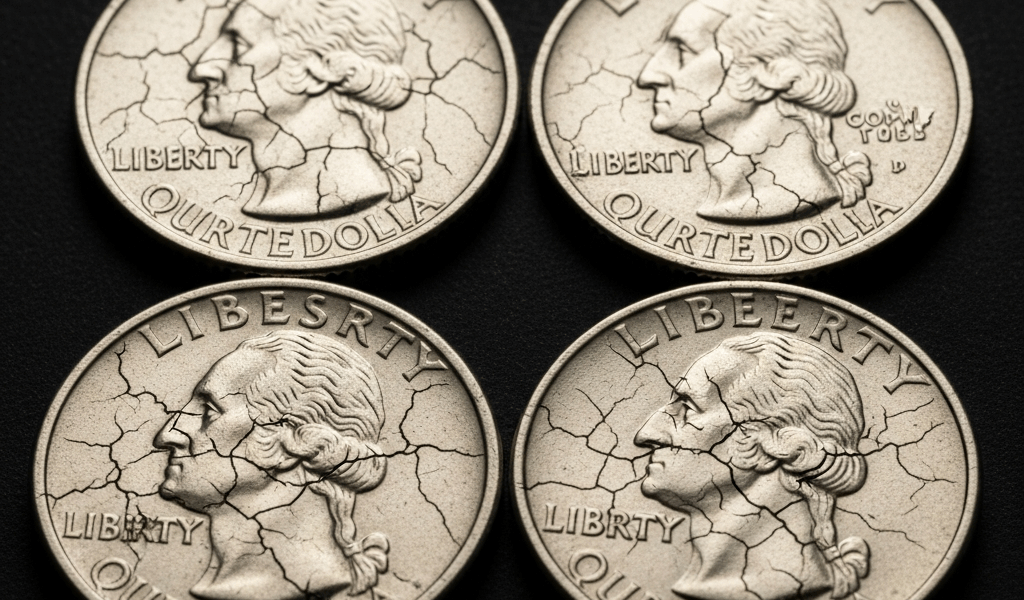
The culprit is weak striking on the obverse Liberty head. Standing Liberty Quarters used a high-relief design demanding perfect dies, perfect pressure, and perfect timing. Most of the time, you didn’t get all three. Liberty’s head — especially the date area positioned right near it — wore first and wore fastest. I’ve held coins that looked completely dateless under normal light, then lit up under UV with just enough digit remnants for attribution. That’s the scarcity nobody talks about.
The Type 1 versus Type 2 distinction compounds everything. In 1917, the Mint recessed the date into the field, protecting it from wear. But here’s what catches intermediate collectors off guard: not all 1917 dates are the same type, and some earlier dates exist only in one type. You can’t assume your 1920s coins are common just because mintage runs were high. Legibility determines real scarcity. A 1920-D with a date you can actually read is far scarcer than a 1930 with mint-mark visibility issues — regardless of what NGC population reports say.
The True Key Dates Beyond the 1916
Everyone starts with the 1916. Only 52,000 were struck, and most didn’t survive circulation. Fair enough — that one earns its reputation. But the 1918/17-S overdate and the 1921 deserve equal respect, and for reasons that go beyond raw mintage numbers.
But what is the 1918/17-S, exactly? In essence, it’s an overdate variety where one year was punched over another in the die. But it’s much more than that. Roughly 11 million coins were struck that year, but finding one in any condition a grader would certify without conservation concerns is brutally difficult. Distinguishing a genuine overstrike from a damaged die or rim strike requires magnification and real experience. I once bought a coin I was convinced was an overdate at an estate sale for $35. Under my 10x loupe, it was just wear. Don’t make my mistake. Even problem-free circulated examples command premiums now because the supply of dateable, original-skin specimens is genuinely small.
The 1921 is a weird animal. Only 1.5 million were minted — putting it alongside acknowledged keys. Yet it shows up in rolls more often than collectors expect. When it does appear, the date is usually either completely worn or so faint that UV examination becomes necessary. A circulated 1921 with bold, readable digits is genuinely scarce. The coin itself? Less so. That’s what makes this date endearing to us set-builders — it humbles you every time.
The 1923-S falls into a similar trap. Mintage was reasonable at 1.8 million, but date legibility on circulated examples is nightmarish. San Francisco Mint striking quality during this period wasn’t consistent — weak strikes combined with Liberty-head wear means a clear-date 1923-S in circulated grade is worth holding onto, even if the mintage number suggests otherwise.
Semi-Key Dates Collectors Miss in Junk Boxes
Probably should have opened with this section, honestly. The 1919-D, 1919-S, 1920-D, and 1926-S are the dates that quietly destroy set-completion timelines because they hide in plain sight.
The 1919-D looks common. Almost 9.5 million were made. But in circulated grade with a fully readable date and legible mint mark? The supply evaporates. I found three 1919-D coins in a single 10-roll bank box purchase — cost me $50 for all ten rolls. Two were nearly undateable. The third was borderline. Finding one with a date bold enough to confirm without tools takes patience most collectors simply don’t have.
The 1919-S has similar problems, compounded by erratic San Francisco striking. The mint mark sits low on the reverse. The date on the obverse is already fighting Liberty-head wear. A properly attributed 1919-S with clear digits is worth the hunt — at least if you’re serious about a complete circulated set.
The 1920-D is where I learned to use shield rivets as a secondary confirmation tool. When the date is barely visible, the rivets on the shield’s lower section tell you whether you’re looking at a later date that wore heavily or an early-mintage coin weakly struck from the start. Five visible rivets often indicates an earlier die state. Small detail. Huge difference.
The 1926-S might be the most underrated find in any junk box. Fewer than 2.8 million were made. I’m apparently a sucker for overlooked semi-keys, and this one works for me while flashier dates never deliver the same satisfaction. Circulated examples with dateable obverses are uncommon enough that I’d classify it as a genuine semi-key — one most set-builders overlook because nobody marketed it as one.
Type 1 vs Type 2 and Why It Changes Scarcity
The 1917 redesign recessed the date into the field, protecting it from the die wear that plagued Type 1 coins. That single change shifted which dates are genuinely hard to find in datable condition. So, without further ado, let’s dive in.
Type 1 covers 1916 through early 1917. The date sits in high relief. Every Type 1 Standing Liberty Quarter you examine will show advanced date wear compared to a similar-grade Type 2. The 1916, all 1917 Type 1 coins, and the 1918 Type 1 exist exclusively in this older design. If you’re building a complete set, you need these dates — full stop. No workarounds.
Type 2 runs from late 1917 through 1930. The recessed date should make reading easier, yet wear still defeats many specimens. The real scarcity difference becomes obvious when comparing Mint State examples. Type 1 coins in MS-65 or higher are rarer, inherently harder to preserve at that level. That’s what makes the Type 1 coins endearing to us collectors who obsess over condition rarity.
While you won’t need an entire reference library, you will need a handful of solid resources — at least a copy of the Official Red Book and access to NGC’s online population data. Set-builders need both types across multiple dates. You can’t just buy any 1917. You need to specify Type 1, then separately source Type 2 examples. Attribution challenges differ dramatically between the two, even when the year stamped on the coin is identical.
How to Search for These Dates Without Overpaying
First, you should start with the full date — at least if you want to avoid wasting money on undateable junk. If you can’t read all four digits under standard light, pull out a UV flashlight before making any offer. Original surface patina should show wear patterns consistent with circulation, not cleaning. A coin that’s undateable from legitimate wear is still worth examining carefully. One that’s undateable because someone polished it is worth passing on entirely.
A 10x loupe might be the best option, as Standing Liberty date examination requires magnification of fine detail. That is because the digits on worn examples are often partially present — visible under the right light and angle, invisible under flat overhead fluorescents. A decent loupe runs around $15 to $25. Worth every penny.
Second, examine Liberty’s head detail. Her profile should show wear consistent with the date area. Sharp head, missing date — that’s a red flag for a worn die rather than honest circulation wear.
Third, check those shield rivets and reverse details. They confirm what you’re reading is accurate and help you spot problem coins before you’ve already paid for them.
Estate sales and bulk-lot purchases from non-collectors remain your best hunting grounds. A collector selling their own set will have already sorted the keys out. A box inherited from someone’s closet will have surprises. That’s where 1919-D, 1920-D, and 1926-S coins wait — for someone patient enough to examine each one properly under decent light. That person might as well be you.

Stay in the loop
Get the latest global coin collector updates delivered to your inbox.