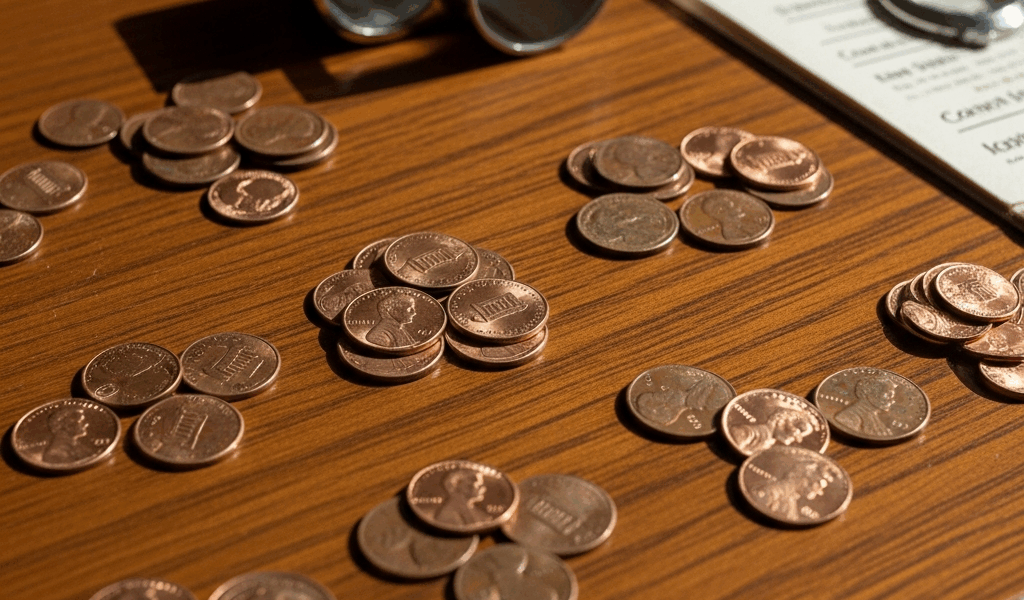
What Makes Draped Bust Cents Worth Attributing
Draped Bust cent collecting has gotten complicated with all the conflicting advice flying around — half of it telling you varieties don’t matter, the other half treating every die crack like a holy relic. As someone who pulled a beat-up 1801 cent from a bulk lot of damaged coppers and genuinely had no idea what I was holding, I learned everything there is to know about this series the hard way. Today, I will share it all with you.
My first instinct was wrong, by the way. I figured all 1801 cents were basically the same coin. Worn is worn, right? Not even close. Draped Bust cent varieties collectors actually pursue represent one of numismatics’ most rewarding rabbit holes — and I wish someone had grabbed me by the collar and explained this earlier.
The series runs 1796 to 1807. Twelve years. Every single date is scarce. You’re not hunting Morgan dollars here, where a $40 coin shows up at every show table. Draped Bust cents demand patience and real capital. But inside this already exclusive series lives another layer entirely: die varieties. Obverse and reverse dies got paired, reused, repaired. Sometimes a die cracked mid-run. Sometimes a date got punched twice. Sometimes the engraver cutting letters by hand into steel simply made a spelling mistake — and there was no fixing it.
Collectors who learn to spot these varieties aren’t chasing abstract distinctions. They’re reading the actual production history of the Philadelphia Mint during its first decade of operation. Sheldon numbers — the attribution system everyone in this hobby uses — exist because serious collectors realized decades ago that a 1799 cent struck from one specific reverse die is genuinely a different numismatic object than another 1799 cent struck from a different one. That’s what makes this series endearing to us variety collectors.
So, without further ado, let’s dive in. While you won’t need a six-figure budget, you will need a handful of basics: a 5x or 10x loupe, decent lighting, and realistic expectations about wear.
The 1800 Over 1798 Overdate — Most Accessible Major Variety
If I had to name one Draped Bust variety that rewards a collector’s first serious attribution attempt, it’s the 1800/1798 overdate. Probably should have opened with this section, honestly.
But what is an overdate? In essence, it’s what happens when a new date digit gets punched directly over an old one on an existing die. But it’s much more than that — it’s a small window into Mint economics. Die stock was expensive in 1800. Someone punched a fresh “0” over the existing “8” from a 1798 die rather than cutting new dies from scratch. The result survived in metal for 225 years.
Take your 10x loupe — I use a Bausch & Lomb Coddington, around $28 online — and look at the leftmost “0” in the 1800 date. Study the base. Study the inside curve. You’ll see the ghost of an “8” sitting behind it. The overdate’s top edge sometimes sits fractionally higher than the right-side zero. It looks like carelessness at first glance. It was actually deliberate copper conservation.
I found a circulated example — AG-3, dark as a penny pulled from a fountain drain — at a flea market outside Harrisburg for $180 three years ago. The dealer had it tagged “1800 cent, worn.” Once properly attributed, that same coin moves for $350 to $500 depending on strike quality and eye appeal. Don’t make my mistake of sitting on finds like this without checking them first.
Even VG examples carry meaningful premiums. Early American Coppers club auction records mention this variety consistently. It’s in every standard reference. And you can actually find circulated examples without mortgaging your entire collection budget — which is rarer than it sounds in this series.
1797 Reverse of 1797 vs. Reverse of 1796 — Same Date, Different Coin
This is where variety collecting stops feeling academic and becomes genuinely practical. I’m apparently someone who owned duplicate coins for a year and a half without realizing it — and this 1797 situation is exactly how that happened.
The 1797 cent comes in two completely different reverse types. Frustrated by unclear references and blurry die photos, I spent eighteen months treating both my 1797 cents as duplicates before someone at an EAC meeting set me straight. One had the Reverse of 1796. One had the Reverse of 1797. Different coins entirely.
Here’s how to tell them apart. Look below the wreath on the reverse — specifically at the stem and leaf arrangement. Reverse of 1796: thin stem, precise leaf spacing. Reverse of 1797: thicker stem, more robust leaves overall. Side by side with a loupe it’s obvious. Alone, without a reference image, it’s easy to miss.
Both versions turn up in circulated grades at reasonable prices. Both belong in a type set. If you’re building a Draped Bust collection by variety rather than just by date, you need both 1797 reverses — full stop. This new idea of treating them as distinct coins took off several years later in the collector community and eventually evolved into the standard practice enthusiasts know and follow today.
That’s what makes this kind of attribution endearing to us variety collectors. You’re not memorizing arcane microdetails. You’re noticing that the Mint physically made two distinct objects and stamped the same date on both of them.
Rare But Real — The 1796 LIHERTY Error and Other Lettering Mistakes
Hand-cut dies meant human error. Serious error. Permanent, unfixable, struck-into-thousands-of-coins error.
But what is a die-cutting mistake exactly? In essence, it’s what happens when an engraver hand-cuts letters into a steel die and gets one wrong — and nobody catches it before production begins. But it’s much more than a curiosity. It’s a surviving artifact of pre-industrial manufacturing.
Frustrated by the monotony of repetitive hand engraving, someone at the Mint in 1796 cut an “H” where a “B” belonged. Every cent struck from that die reads “LIHERTY” on the obverse. Not wear. Not damage. Not a cleaning artifact. Just a man with a steel punch and a bad moment. That was 1796.
Finding one won’t bankrupt you, but it will absolutely command attention at any show table. Dealers recognize it on sight. Collectors seek it deliberately. I’m apparently someone who almost passed one up at a Baltimore show for $220 because I didn’t have my loupe out — don’t make my mistake.
Other lettering varieties reward close examination too. Slightly different letter spacing. Positioning anomalies. Die cracks that accumulated over hundreds of strikes and tell you roughly where in the production run a given coin was struck. These aren’t always dramatic errors, but they’re real die characteristics that separate one obverse from another.
How to Start Attributing Your Draped Bust Cents
Probably should have opened with this section, honestly. You don’t need to memorize Sheldon’s entire taxonomy before you start.
While you won’t need a research library, you will need a handful of resources. First, you should establish the date with certainty — at least if you want any attribution attempt to mean something. Good raking light, a steady hand, no guessing. Second, note the reverse type by examining stem thickness and leaf arrangement under magnification. Third, check the obverse for letter positioning and any obvious anomalies. Only then pull out a reference image.
The Early American Coppers club might be the best option, as Draped Bust attribution requires community support. That is because written references alone don’t substitute for seeing comparison photos alongside other collectors who’ve handled hundreds of these coins. Members share attributions openly, sell to each other at fair prices, and genuinely care about correct identification rather than just market value.
I’m apparently someone who tried attributing solo for two years before joining — and the Bausch & Lomb loupe plus EAC membership combo works for me while going it alone never really did. Unattributed AG and G examples exist at reasonable prices in dealer junk boxes and online lots. These are legitimate starting points. The die characteristics, wear patterns, and metal color on even a heavily circulated Draped Bust cent tell you something real about 1790s coinage production.
Attribution is a learned skill. Every loupe session builds the visual vocabulary that eventually makes identification almost automatic. Start simple — find your 1800/1798 overdate. Learn the 1797 reverses. Build from there. The Draped Bust series rewards collectors who slow down.

Stay in the loop
Get the latest global coin collector updates delivered to your inbox.