Why Wheat Penny Rolls Still Reward Patient Hunters
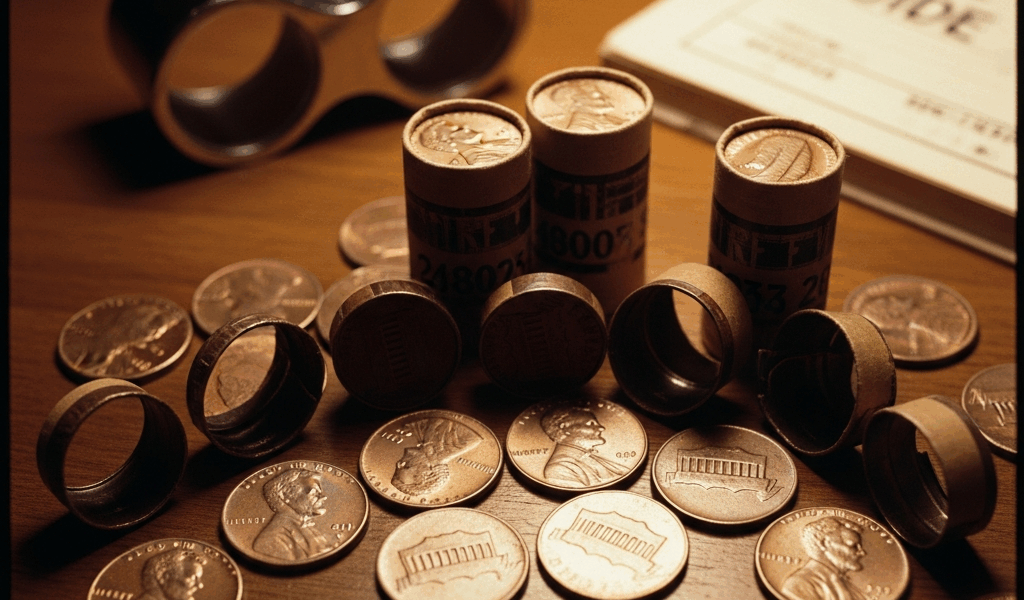
Wheat penny hunting has gotten complicated with all the misinformation flying around about where these coins actually hide. Let me cut through it. I’ve pulled close to $800 in face value of Wheat cents over three years — most were boring common dates, sure, but a 1952-D doubled die obverse showed up in a bank roll last spring and made the whole obsession feel worthwhile. Bank-wrapped rolls from your local credit union, estate sale accumulations, and the occasional uncirculated group lot surfacing on eBay — these are still live hunting grounds. Don’t let anyone tell you otherwise.
The Wheat series runs 1909 to 1958. That’s fifty years of production across Philadelphia, Denver, and San Francisco. Fifty years of rushed die work, striking mishaps, sloppy mintmark punches, and metal composition weirdness. Wartime production especially — higher press speeds, worn dies, less quality control at every stage. RPM varieties went formally uncatalogued for decades until collectors started paying real attention. The result is a variety goldmine sitting inside rolls that most people treat as face-value copper. That’s what makes the Wheat series endearing to us hunters. So, without further ado, let’s dive in.
Doubled Die Obverse Dates Every Hunter Should Know
The 1955 doubled die obverse is the benchmark. Everyone knows it. Even at 5x magnification the doubling on LIBERTY is unmistakable — letters look stamped twice, with clean separation between the ghost image and the primary strike. Values sit somewhere in the $200–$500 range depending on grade. Finding one in a roll genuinely feels like scratching off a lottery ticket. But it’s so famous that casual hunters blow right past the second-tier varieties hiding underneath their loupes.
Probably should have opened with this section, honestly. The 1936 DDO is more achievable than the ’55 and carries solid collector recognition. Doubling appears on the upper left of LIBERTY and bleeds slightly into the field. I examined one at a local coin club meeting — it graded VF25 — and the doubling was visible under plain office fluorescent lighting, no magnification needed. Then there’s the 1941 DDO. Doubling hits the D in LIBERTY and the numeral 1 in the date. Circulated examples pull $75–$150. Genuinely underpriced for what it is.
The 1952-D DDO has a reputation, and it earns it. Obverse doubling concentrates on LIBERTY and IN GOD WE TRUST. But what is it that separates this one from the rest? In essence, it’s a variety that surfaces in circulated grades regularly enough that you’re not chasing a ghost — but it’s much more than that. It rewards systematic hunters specifically. Expect very fine to extremely fine examples once every 300–400 rolls if you’re disciplined about your search. Store finds in acid-free holders — slabs are optional for personal collections, but archival 2×2 flips with Mylar windows are non-negotiable.
What to Look For Under Magnification
Position the coin under 10x magnification. Use a halogen or LED loupe with bright, angled light — the angle matters more than most beginners realize. Doubled images should show clear separation from the primary strike. Blurring means wear or die polish, not doubling. Cross-reference immediately with the Cherrypickers Guide or CONECA’s online attributions before getting excited. A stereo microscope at 15x–20x removes all remaining doubt. I use an AmScope SM-1B — ran me about $200 on Amazon — and it completely changed how confident I feel attributing varieties at home. Don’t make my mistake of squinting through a drugstore loupe for two years first.
Repunched Mintmarks Worth Pulling From Circulation
But what is an RPM? In essence, it’s what happens when a die received a second mintmark punch slightly offset from the first — leaving a visible ghost or doubling on the D or S. But it’s much more than that. It’s an advantage. Because RPMs were never promoted the way key dates were, they still trade at face value to maybe $2–$8 depending on visibility. Casual collectors walk right past them. That’s the smart hunter’s edge.
The 1946-S/D is the crown jewel here. The S mintmark was punched directly over a D, leaving both visible under magnification. A standard 10x loupe reveals it immediately — the displacement is that significant. The 1944-D/S is its mirror twin. D punched over S. Both varieties surface regularly in Wheat rolls because San Francisco and Denver were high-volume wartime mints cranking out cents under serious production pressure. Pull rates honestly feel higher than DDO varieties, probably because fewer hunters know what they’re seeing when they look at the mintmark area.
Examine mintmarks at 20x using a stereo microscope. The secondary punch appears as a shadow offset from the primary. Document the direction — left, right, above, below — before doing anything else. Attribution depends on that detail. The Cherrypickers Guide carries reference photos for nearly every Wheat cent RPM variety. Cross-reference before committing to a holder. Always.
Off-Center Strikes and Die Cap Errors in the Wheat Series
Off-center strikes become collectible at roughly 20% displacement — that’s the informal numismatist cutoff. A Wheat cent shifted 25–30% off-center is genuinely scarce. AU or UNC examples with clear date and mintmark visibility carry premiums of $15–$50 depending on the specific date and how much design survived the misalignment.
Finding one in a roll feels impossible until suddenly it isn’t. I pulled a 1950 cent shifted roughly 28% off-center — the left side of LIBERTY was completely gone, date sitting near the rim. It graded MS62 at a local third-party grader. That was a good afternoon. Die cap errors, where a thin layer of struck metal clings to the die and produces a mushroom-shaped strike, are far rarer in Wheat series rolls. Brockage errors exist too — genuine ones, where a coin strikes the obverse or reverse of another coin instead of a die face. Exceptional finds. Don’t build a hunting strategy around them. Accept them as luck when they happen.
How to Examine and Attribute a Wheat Cent Variety at Home
While you won’t need a professional numismatic laboratory, you will need a handful of solid tools. A 10x jeweler’s loupe is your minimum entry point — $12–$25 on Amazon, lasts essentially forever. A stereo microscope is the real upgrade. The AmScope SM-1B might be the best option, as attribution work requires consistent magnification and stable lighting. That is because angled, adjustable light sources reveal doubling and repunching that flat lighting completely hides. The SM-1B’s 3.5x–90x range with built-in dual halogen lights handles everything in the Wheat series comfortably. It pays for itself after three or four confirmed attributions.
Technique is everything. Hold coins with cotton gloves or a pen-style coin holder — skin oils are the enemy. Position the light source at roughly 45 degrees to the obverse surface. Tilt the coin slowly under the loupe or scope while watching the design elements. Doubling, repunching, and off-center displacement reveal themselves under angled raking light in ways that straight-on illumination completely masks. Never clean a coin before attribution — or honestly, ever. Numismatic value disappears the moment you alter the surface. I’m apparently a slow learner on this one, and an early cleaning mistake cost me a presentable 1943 steel cent. Don’t make my mistake.
Cross-reference every find. Cherrypickers Guide third edition or newer, CONECA’s online database, specialty forums like the Variety Vista attribution boards. Photograph through the loupe or scope if possible — even a smartphone held steady against the eyepiece works passably well. Once confirmed, house the coin in an archival 2×2 flip with a Mylar window and acid-free cardboard backing. Label it with the date, mintmark, variety designation, and your discovery date. A small investment in proper storage protects both the coin and your collection’s long-term integrity.

Stay in the loop
Get the latest global coin collector updates delivered to your inbox.