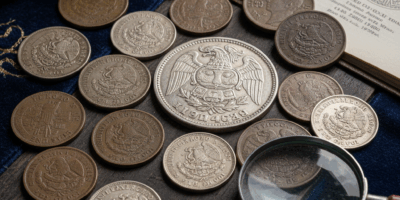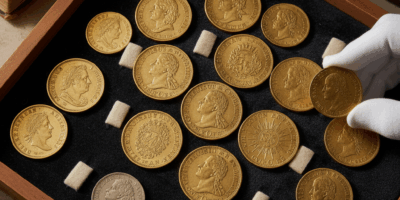
Japanese coinage tells a remarkable story of transformation from feudal isolation to modern global power. The Meiji Restoration of 1868 launched Japan into the modern numismatic era, and the coins minted since then document the nation’s rapid industrialization, military expansion, devastating defeat, and remarkable postwar recovery.

Meiji Era Modernization: 1868-1912
Emperor Meiji oversaw the transformation of Japanese coinage from feudal-era cash coins to a Western-style decimal system. The New Currency Act of 1871 established the yen as the monetary unit, initially tied to gold and silver. Early Meiji coins featured the imperial chrysanthemum and dragon motifs that would define Japanese numismatics for decades.
The Osaka and Tokyo mints produced stunning gold and silver coins during this era. The 1 yen silver trade dollar, designed to compete with the Mexican peso in Asian commerce, is particularly beautiful. Gold 5, 10, and 20 yen coins from this period are highly prized, with earlier dates commanding substantial premiums. Copper sen and rin denominations served everyday transactions.
Taisho and Early Showa Periods: 1912-1945
The brief Taisho era (1912-1926) saw continuation of Meiji designs with updated reign marks. Silver coins remained in circulation, with the distinctive sunburst design appearing on various denominations. The transition to Showa (Emperor Hirohito’s reign, beginning 1926) brought subtle design modifications reflecting the new era.
The 1920s and 1930s witnessed the gradual reduction of precious metal content as Japan prepared for war. The beautiful phoenix design appeared on silver 50 sen coins during this period. Nickel replaced silver for smaller denominations, while gold coins ceased regular production. Collectors appreciate the artistic quality maintained despite material restrictions.
World War II Era Coinage
War brought dramatic changes to Japanese coinage. Aluminum replaced copper and nickel as strategic metals became scarce. The distinctive hole in the center of sen coins, introduced to save metal and distinguish denominations by touch, became a wartime feature. Tin and zinc alloys appeared in later war years, producing coins of notably poor quality.
Some of the most challenging Japanese coins to locate in high grades date from 1944-1945. Mintages collapsed as resources went to the war effort, and bombing disrupted mint operations. Occupation-era pieces from territories like the Philippines and Netherlands East Indies also fall within this collecting area.
Post-War Occupation Issues
The immediate postwar period saw emergency coinage minted under American occupation supervision. The famous 1946 brass 50 sen with the rice stalks design symbolized the agricultural focus of reconstruction. Aluminum became the standard metal for small denominations, a practice continuing today.
Inflation during the occupation made earlier coins essentially worthless, and most were melted or discarded. High-grade examples of occupation-era coins, particularly early Showa dates, are considerably scarcer than mintage figures suggest. The transition to the new yen of 1948 marked the beginning of modern Japanese currency.
Modern Commemorative Coins
Japan entered the commemorative coin era with the 1964 Tokyo Olympics issues, which remain popular with collectors worldwide. The 1970 Osaka Expo coins and 1972 Winter Olympics issues followed. Japan now regularly issues commemorative 500 yen coins, prefecture series, and special mint sets.
Precious metal commemoratives began with the 1986 60th year of Showa 100,000 yen gold coin, featuring an unprecedented denomination. The Emperor’s enthronement in 1990 and other imperial events have generated significant commemorative issues. Recent commemoratives celebrate World Heritage sites, the bullet train anniversary, and the 2020 Tokyo Olympics.
Key Dates and Varieties
Early Meiji gold coins, particularly from years 1-5 (1868-1872), are rare and valuable. The 1870 20 yen with the old-style chrysanthemum is among the rarest regular issues. Silver trade dollars from the Osaka mint in specific years command premiums based on mintage variations.
For modern collectors, the 1958 50 yen with no hole (pattern only) and certain low-mintage commemoratives are highly sought. Proof sets from the 1950s-1960s are surprisingly scarce, as the concept of coin collecting developed more slowly in Japan than in Western countries. Error coins, particularly wrong planchet strikes, attract specialized collectors.
Japanese Coin Grading
Japanese coins present unique grading challenges. The traditional Japanese approach to preservation often resulted in cleaned coins, which Western grading standards penalize. High-relief designs on early yen denominations show wear patterns different from Western coins. Strike quality varies significantly, particularly on wartime issues.
The major third-party grading services have established populations for Japanese coins, though some series remain under-submitted. The JNDA (Japan Numismatic Dealers Association) catalog provides essential reference information, with specialized guides available for Meiji gold and commemorative series. Auction records from Japanese sales offer important pricing data.
Whether pursuing the imperial elegance of Meiji gold, the historical significance of wartime issues, or the accessibility of modern commemoratives, Japanese coins offer a rewarding collecting journey through one of Asia’s most dynamic nations.