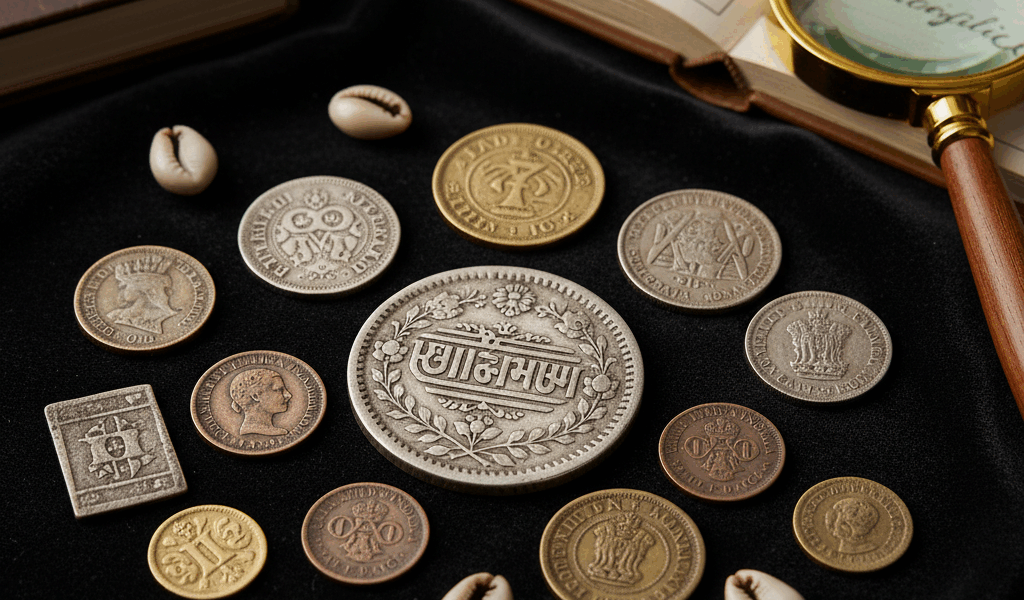
Indian numismatics spans over two millennia, from the punch-marked silver of ancient kingdoms to the colorful commemoratives of the modern republic. Few collecting areas offer such diversity, with Mughal masterpieces, British colonial issues, princely state oddities, and Republic of India coins all available to collectors at various price points.
Mughal Empire Coinage
The Mughal Empire (1526-1857) produced some of the most beautiful coinage in world history. Mughal silver rupees featured intricate Persian calligraphy, floral designs, and astrological symbols. The gold mohur represented substantial wealth, while copper dam coins served everyday commerce.
Emperor Akbar introduced the iconic square rupee and zodiac coins, which are highly prized today. Jahangir’s rare wine cup coins and portrait mohurs rank among the most valuable Indian pieces. Shah Jahan and Aurangzeb issues are more accessible, with silver rupees from their reigns often available for reasonable prices. Mint names in Persian script help collectors attribute these coins to specific cities.
British India Colonial Issues
British colonial coinage in India evolved through three distinct periods. East India Company issues (1835-1857) featured the portrait of William IV and later Queen Victoria. Crown Colony coinage (1858-1947) continued under successive British monarchs, with the Indian Empire designation appearing on coins.
The transition from silver to cupro-nickel occurred during World War I, and the distinctive scalloped edges of some denominations make British Indian coins easily recognizable. Key dates include the 1862 re-engraved bust rupees, 1911 pig rupee (quickly withdrawn), and the rare 1939 proof sets. Anna and pice denominations in copper and bronze offer affordable entry points for new collectors.
Princely States: A Collector’s Paradise
Over 500 princely states operated under British suzerainty, and many issued their own distinctive coinage. Hyderabad produced elegant nazarana presentation pieces and regular currency bearing the Nizam’s tughra. Mysore featured the distinctive gadyana gold coins and copper cash with the elephant motif.
Smaller states like Kutch, Baroda, and Mewar created unique designs reflecting local culture and rulers. Many princely state issues are remarkably affordable despite their rarity, as the collecting base remains relatively small. Attribution can be challenging, as numerous varieties exist with subtle differences in legends and symbols.
Republic of India: 1947 to Present
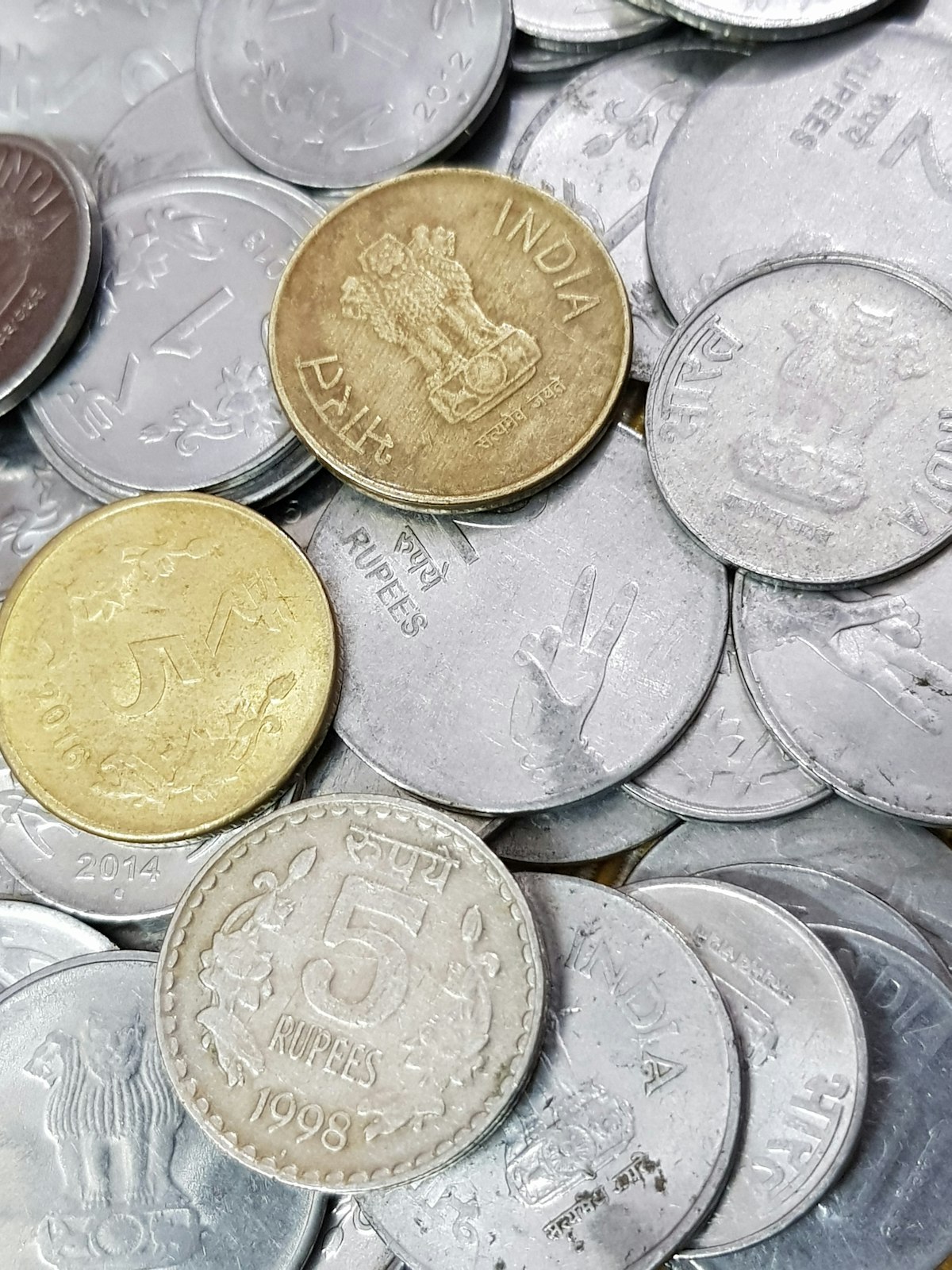
Independent India initially continued the anna-pice-rupee system before decimalization in 1957 introduced naye paise. Early republic coins featured the Ashoka lion capital, which remains the national emblem. The distinctive map of India on early paise denominations makes these coins instantly recognizable.
Commemorative coinage began in 1964 with the Jawaharlal Nehru memorial coin and has expanded dramatically since. Food and Agriculture Organization (FAO) issues, celebrating agricultural development, are particularly numerous. Recent commemoratives honor historical figures, events, and national achievements, with special mint sets offering collectors convenient packaged options.
Key Dates and Rarities
Among Mughal coins, zodiac issues from Jahangir and anything with a portrait bring substantial premiums. The 1889-B India rupee with inverted B mintmark and 1862 one-rupee with seven lotus flowers are legendary British India rarities. The 1939 proof sets, produced just before World War II, are highly sought after.
For Republic of India collectors, the 1950 and 1954 proof sets are scarce and valuable. Certain years of the one-rupee coin, particularly 1963 and 1975-B, are notably difficult in high grades. Mule coins combining dies from different years occasionally appear and command significant premiums when authenticated.
Authentication Concerns
The Indian coin market has unfortunately attracted counterfeiters, particularly for valuable Mughal gold and British India proof issues. Modern counterfeits of Jahangir portrait mohurs and Akbar zodiac coins have fooled experienced collectors. Weight and diameter measurements, along with careful study of calligraphy styles, help detect fakes.
Third-party grading from NGC or PCGS provides important protection for significant purchases. Provenance from established collections adds confidence, while purchasing from reputable dealers with return policies reduces risk. The Indian Numismatic Society and other organizations provide resources for authentication education.
Building an Indian Collection
New collectors often begin with Republic of India commemoratives, which are affordable and widely available. British India type sets, with one coin from each denomination, provide historical breadth without excessive cost. Mughal enthusiasts might start with common silver rupees before pursuing rarer emperors or mints.
Specialized collections might focus on a single Mughal ruler, a particular British mint, or princely state issues from a specific region. The sheer variety of Indian coinage means that collectors can pursue unique directions unavailable in other numismatic areas. Reference catalogs by Krause-Mishler and specialized works on Mughal coinage are essential tools for serious collectors.
Indian coins offer something for every collector, from the calligraphic artistry of Mughal masters to the modernist designs of the republic. This rich numismatic heritage continues to attract collectors worldwide who appreciate both the beauty and historical significance of these fascinating pieces.



Stay in the loop
Get the latest global coin collector updates delivered to your inbox.