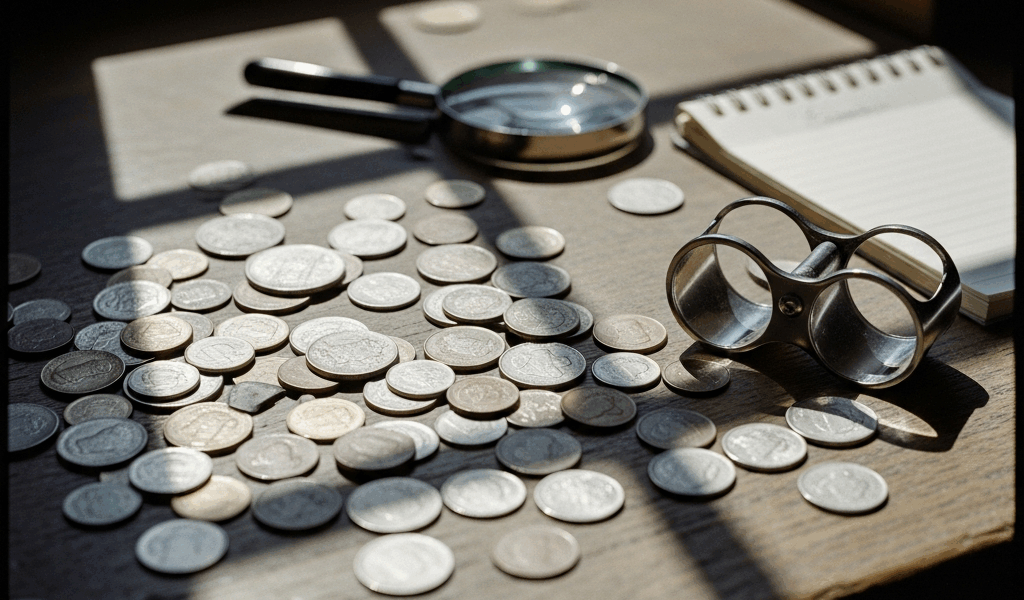
Coin Grading Has Gotten Complicated With All the Misinformation Flying Around
As someone who has been digging through coin bins and haunting estate sales for going on eight years, I learned everything there is to know about getting coins graded without bankrupting yourself. Today, I will share it all with you.
Here’s the short version: true free professional grading doesn’t exist. Not really. But what I wish someone had told me back when I was starting out — with maybe $400 to my name and zero interest in paying $30 to grade a $50 coin — is that there are legitimate ways to get professional opinions for next to nothing. Sometimes literally nothing.
I spent months researching every possible angle when I started. Forums, coin shows, dealer relationships, app comparisons. What I found surprised me. Multiple paths exist depending on what your coins are actually worth and what you’re trying to do with them.
The hard truth: want an official slab from PCGS or NGC with a numeric grade and authentication? You will pay. Cheapest official route runs about $20 per coin minimum. But get creative — explore community feedback, wait for specific submission windows — and you can cut that cost down to almost nothing. So, without further ado, let’s dive in.
This article includes affiliate links. We may earn a commission at no extra cost to you.
Free Grading Opinions — Where to Actually Get Them
Let’s start with what’s genuinely free. I’ve used all of these personally. They’ve saved me hundreds in unnecessary grading fees over the years.
CoinTalk Forums
CoinTalk is where serious collectors hang out — and I mean serious. Post a clear photo of your coin, both obverse and reverse, ideally shot in natural light, and experienced graders will respond. I’ve pulled 15 to 20 responses on a single post before. These people grade coins professionally. They’re not taking payment. They’re there because they genuinely love the hobby. That’s what makes CoinTalk endearing to us collectors. Feedback typically lands within one grade point of what a professional service would assign.
Reddit’s r/coins
Similar energy to CoinTalk, slightly larger audience, faster turnaround. Post your coin with the year, mint mark, and a condition description. Responses come in within minutes sometimes. One honest caveat: quality varies. You’ll get genuine expert input mixed in with casual guesses from people who’ve owned three coins. Read the highest-rated comments first — experienced members get upvoted, casual guessers get ignored.
PCGS Photograde App
Free. Download it right now. The app compares your coin against certified graded examples at every point on the Sheldon scale — 1 through 70. I use it on every single coin I’m considering for submission alongside a 10x/20x jeweler’s loupe for examining surface details up close. It’s not a professional grade, obviously, but it eliminates the guesswork entirely. You’re literally looking at certified MS-65, MS-66, MS-67 examples and holding yours up next to them. PCGS built this tool, so the reference data is solid.
NGC Price Guide
NGC publishes population reports and sale prices for graded coins. Search your specific coin and you’ll see which grades exist in their registry and what each actually sold for. This tells you whether grading even makes financial sense before you spend a dime. If the highest grade ever certified is MS-64 and it sold for $35, and grading costs $25 — well. The math is right there.
The Honest Limitations
Free opinions carry no market weight. A collector on Reddit telling you your coin is MS-67 doesn’t mean dealers will buy it as MS-67. For resale, insurance, or authentication purposes, an official grade matters. For your personal collection and your own education? Free opinions are genuinely, legitimately useful. Don’t dismiss them just because they’re free.
Cheapest Professional Grading Options — Actually Getting Slabbed
Probably should have opened with this section, honestly. For most collectors asking this question, this is the real question: how do I get an official grade without spending a fortune?
NGC Economy Tier
NGC runs an Economy service tier. As of my last submission in March 2024, it was $20 per coin with a 20-business-day turnaround. That’s the cheapest official path from a major grader — full stop. The grade is identical to standard service. Same slab, same authentication, same holder. You’re just waiting longer. For any coin under $150 in value, this is the only submission method I’d recommend. Don’t pay standard rates when economy exists.
Bulk Submissions at Coin Shows
PCGS and NGC representatives show up at coin shows accepting submissions directly. Submit multiple coins at once and show-special pricing kicks in. I’ve done 10 coins at $18 each instead of $25. The per-coin discount isn’t dramatic, but across 10 coins that’s $70 back in your pocket. Shows run monthly in most major cities — check the Professional Numismatists Guild website for events near you.
Dealer Group Submissions
Local coin dealers submit in bulk to the grading companies regularly. Ask if they’ll accept outside submissions. Some charge just $2 to $3 per coin above the base grading fee to handle the logistics. So $25 grading plus $3 dealer handling versus $28 retail. Not transformative on one coin. Across 15 coins over a year, it adds up, and it’s considerably easier than navigating the submission process yourself the first few times.
Third-Party Graders
Smaller services like CGC Coins sometimes offer lower per-coin rates. I’m apparently a modern coin person, and CGC at $15 per coin works for me while PCGS retail pricing never makes sense for that material. Their slabs aren’t as liquid as PCGS or NGC on the secondary market yet, but they’re improving. Only consider third-party graders for coins you plan to hold long-term — not for anything you’re planning to flip quickly.
When Grading Is Not Worth the Money
This section matters. I’ve wasted real money here. Don’t make my mistake.
Coins worth under $100 rarely justify grading costs. A $45 coin that grades MS-65 might sell for $55 slabbed — but you paid $20 to grade it. The math doesn’t work unless a specific grade unlocks a serious premium. A $400 coin is different. Grading at $25 makes sense when a grade bump could add $100 or more in realized value. Your $20 Lincoln cent in AU-58? It doesn’t.
Learn the Sheldon scale yourself first. Spend 30 minutes with the PCGS Photograde app. Grade your coins 1 through 70 in a personal spreadsheet. Self-grading is accurate enough for insurance documentation and personal record-keeping. Official slabs aren’t necessary for every coin in your collection.
I grade maybe 1 in 20 coins I own. The other 19 are logged with a self-assigned grade based on the Sheldon standard. That’s completely reasonable. Professional grading exists for coins with real market value or significant collector demand. Use it strategically — not reflexively.
The budget-conscious approach, distilled: get free opinions first using forums and the PCGS app. Submit only coins above $100 in value, and only when a grade bump actually moves the price. Batch your submissions at shows whenever possible. Never pay full retail when NGC Economy exists and you can wait 20 business days. That’s how you build a legitimately graded collection without draining the fund you should be spending on actual coins.

Stay in the loop
Get the latest global coin collector updates delivered to your inbox.